essay · non fiction · 2 min read
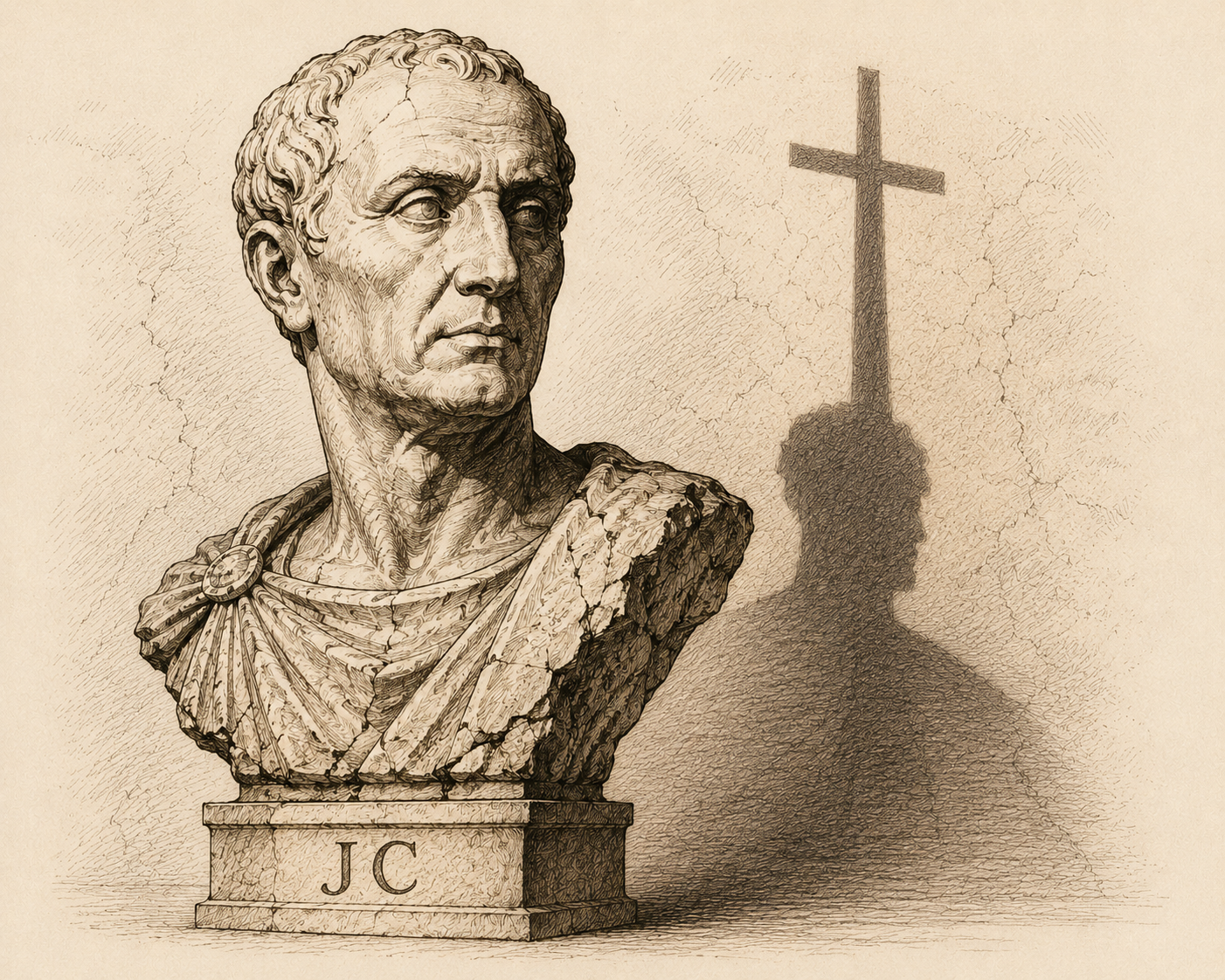
JC
Before Christianity could conquer the world, Rome first had to build it.
essay · non fiction · 2 min read
Before Christianity could conquer the world, Rome first had to build it.
Julius Caesar, a man who became a god, died his brutal death in 44 B.C., at the apex of his success. Jesus Christ, the man whose father was God, died his brutal, failure’s death about three quarters of a century later.
Christ’s church has far outlasted Caesar’s empire, but I suggest that without Caesar there could have been no Christianity. The former created the conditions necessary for the success of the latter.
Many elements of the history of Christ and the Church that bears his name depend upon the Roman Empire having come into existence a few decades before his birth.
For example, the Roman annexation of Judaea seems to have been almost incidental. It was a by-product of the struggle for supremacy between Caesar and his rivals. However, it transformed the context in which Jesus carried out his ministry. Peripatetic preachers and teachers such as he were not a new phenomenon in the region. Messianic prophecies had been around for centuries. However, the experience of being under foreign military domination crystallised in the minds of many Jews the image of a leader who might bring freedom. Because this was so much desired it was hoped and could be believed to be imminent. A particularly effective preacher could plausibly be taken for the Messiah.
They share initials, but have much more than that in common. Caesar was a necessary precondition of Christ.
The Christian construct had now been established and is still with us, while Caesar’s drifted reluctantly and often violently into history.